Your First Ballroom Competition: A Sarasota and Bradenton Guide to Pro-Am Dancing
Every few months, a student hangs back after a lesson and asks us the same question. Usually in a half-whisper, like they're confessing something: "Do you think I could ever do that? Compete, I mean?"
The answer is almost always yes.
We say "almost always" because it depends on what you want out of it — not on your age, not on your natural talent, and not on how long you've been dancing. Ballroom is one of the very few sports on earth where a complete beginner can walk onto a real, sanctioned competition floor within a year of their first lesson. And if you're dancing in Sarasota, Bradenton, or Lakewood Ranch, you happen to live right in the middle of one of the busiest and best competition corridors in the country.
So here's everything we tell our students when they ask:
First things first: you don't need a partner
This is a common misconception that hinders a lot of people. You picture a competition and you picture two amateurs who've been dancing together for years, and you think, "I don't have anyone to do that with."
Well, guess what? That's where we partner!
The overwhelming majority of adult students in the United States compete pro-am — short for professional-amateur. You dance with your instructor. She leads, you follow (or the other way around, gentlemen), and the judges are watching you, not her. Your professional partner is there to bring out the best version of yourself.
Entries are split by gender, age bracket, and experience level, so a 62-year-old woman who started lessons in March is not being scored against a 24-year-old who's been dancing since middle school. She's scored against other women in her age range at her level. That's the whole point of the structure.
There's also am-am, where two students compete together. It's wonderful when it happens organically. It's just not where most people start.
The four styles, and which you should pick
You don't compete in "ballroom." You compete in a style, and there are four of them.
American Smooth — Waltz, Tango, Foxtrot, Viennese Waltz. Elegant, traveling, and the partnership opens and closes. This is what most people picture when they hear "ballroom."
American Rhythm — Cha Cha, Rumba, Swing, Bolero, Mambo. Grounded, hip-driven, and enormously fun. Easiest on the knees of the four, in our experience.
International Standard — Waltz, Tango, Viennese Waltz, Foxtrot, Quickstep. Closed hold the entire time. Beautiful, and unforgiving — there's nowhere to hide.
International Latin — Cha Cha, Samba, Rumba, Paso Doble, Jive. The most athletic of the four, and the one you've seen on television.
Where you'll start, and how you'll progress
Every student enters at a level, and the levels are a ladder.
You'll begin as a Newcomer. Here's the part that catches people off guard: once you've danced your first NDCA-sanctioned event, you can only stay in Newcomer for one year. That's it. After that you're in Bronze, ready or not. It isn't a punishment — it's there to keep experienced dancers from parking in the beginner division and collecting easy trophies. But it does mean you should think of Newcomer as a doorway rather than a room.
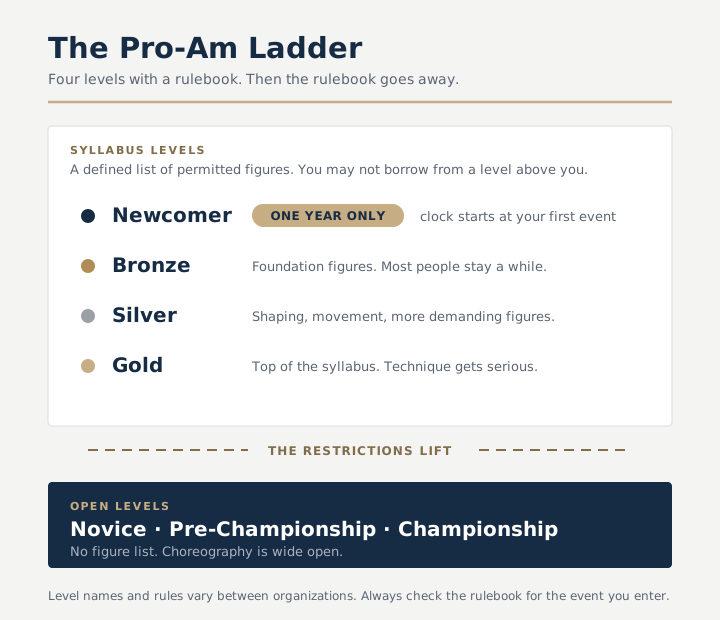
From there it's Bronze, Silver, and Gold — the syllabus levels. In each one, there's a defined list of figures you're allowed to use, and you cannot borrow from a level above you. Judges notice. Above Gold sit the open levels, where the figure restrictions come off entirely and choreography is wide open.
In some cases, you can start in Bronze. Take it from our student Scott:
When you’re starting out, you’re at the bronze level with multiple levels within bronze. Then as you get proficient, you can move to silver level and to gold level. What I have found is I need to practice on my own outside of lessons to work on the techniques we learn in our lessons together. This way we are not repeating, and we are continuing to move forward.
Level names and rules vary between organizations. Sanda will always confirm the specific rulebook for whichever event you're entering.
The Florida circuit, as measured from our front door
We are only a 50-minute drive from one of the best-loved competitions in the state. Florida Star Ball runs every February at the Hilton St. Petersburg Carillon Park, organized by John DePalma and Marianne Nicole. Our team goes every year. You can compete on Saturday and sleep in your own bed on Saturday night, if you want.
Orlando is roughly two hours up I-4 and hosts two significant events — Millennium DanceSport in June, and the United States Dance Championships one of the largest national level dance competitions in Orlando. Both are big, both are fun, and both are a genuinely different experience from a smaller regional comp.
And if you want a taste of the circuit without a full weekend commitment, the Palm Beach Classic runs a one-day format down on the east coast in January. About three hours in the car.
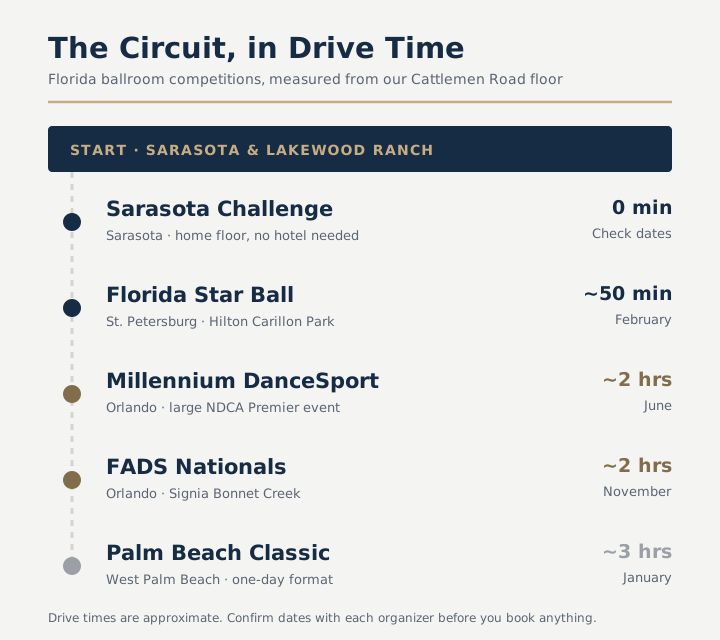
There's also the Sarasota Challenge and the Florida State DanceSport Championships right in our own backyard. We don't sponsor or promote any of these events — we just dance at them.
Let's talk about money, transparently
Nobody writes this part down, so we will.
Pro-am competition has three real costs, and studios that gloss over them aren't doing you any favors.
1. Lessons. This is the obvious one, and it's how you learn and get better. Competition doesn't require more lessons so much as it requires consistent ones. Students preparing for an event typically move to 3-6 privates a week in the eight to twelve weeks beforehand.
2. Entries. You pay per heat. A heat is one dance, on the floor, for about ninety seconds. Most first-timers enter somewhere between four and twelve heats across a weekend. You will hear people say "just do a handful your first time," and you should listen to them. You don't want to overwhelm yourself while starting out.
3. Everything else. Your travel and floor fees, the hotel, the gown or the tails, hair and makeup on the day. The wardrobe is important — a clean, simple ballroom dress, or proper outfit for the guys, is necessary, and plenty of our students rent or buy secondhand for their first outing.
Here's the thing: you can absolutely do a first competition on a modest budget. One day, four heats, one dress, your own bed that night. Some of the best experiences our students have had cost less than a long weekend at Disney.
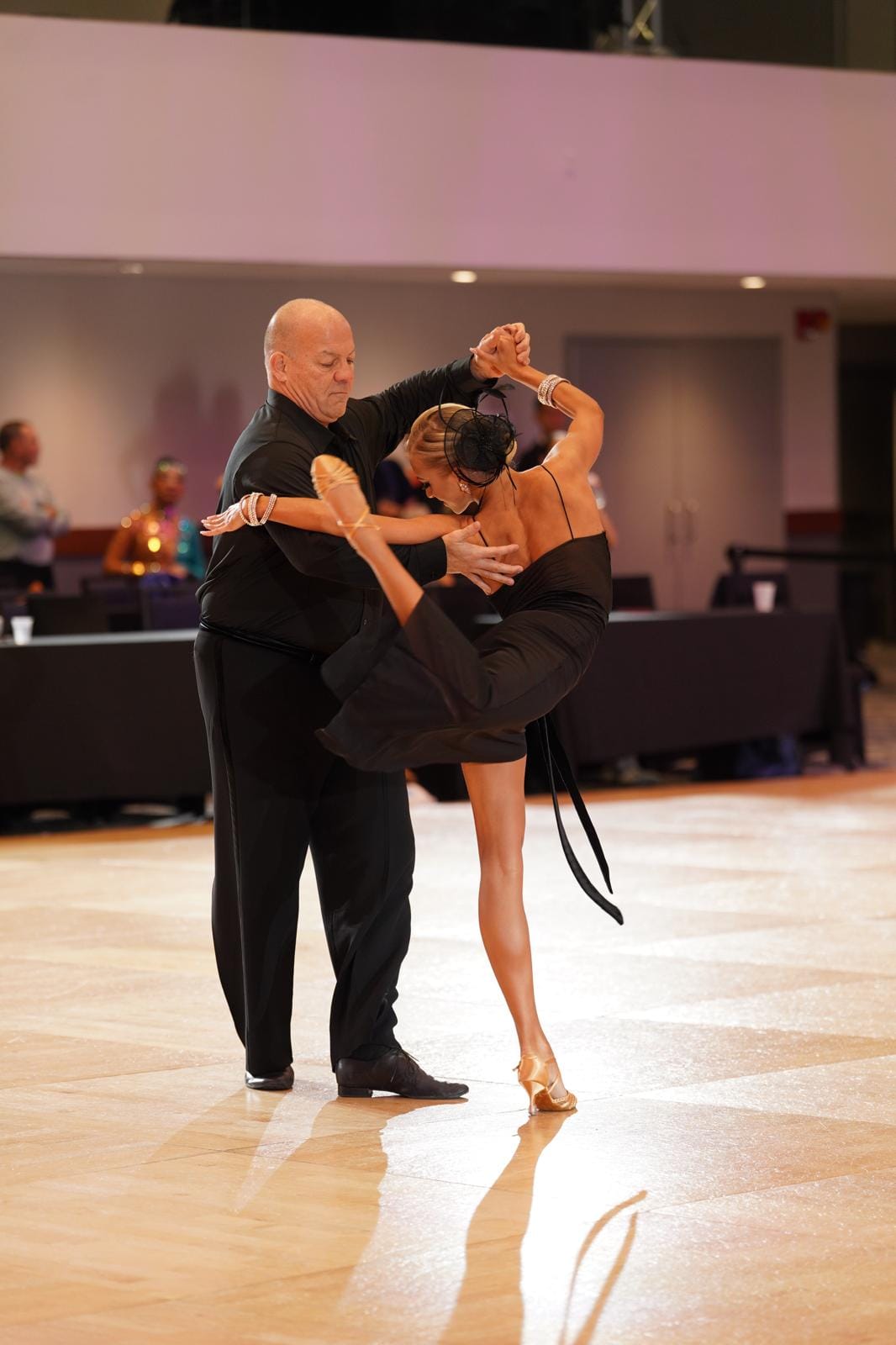
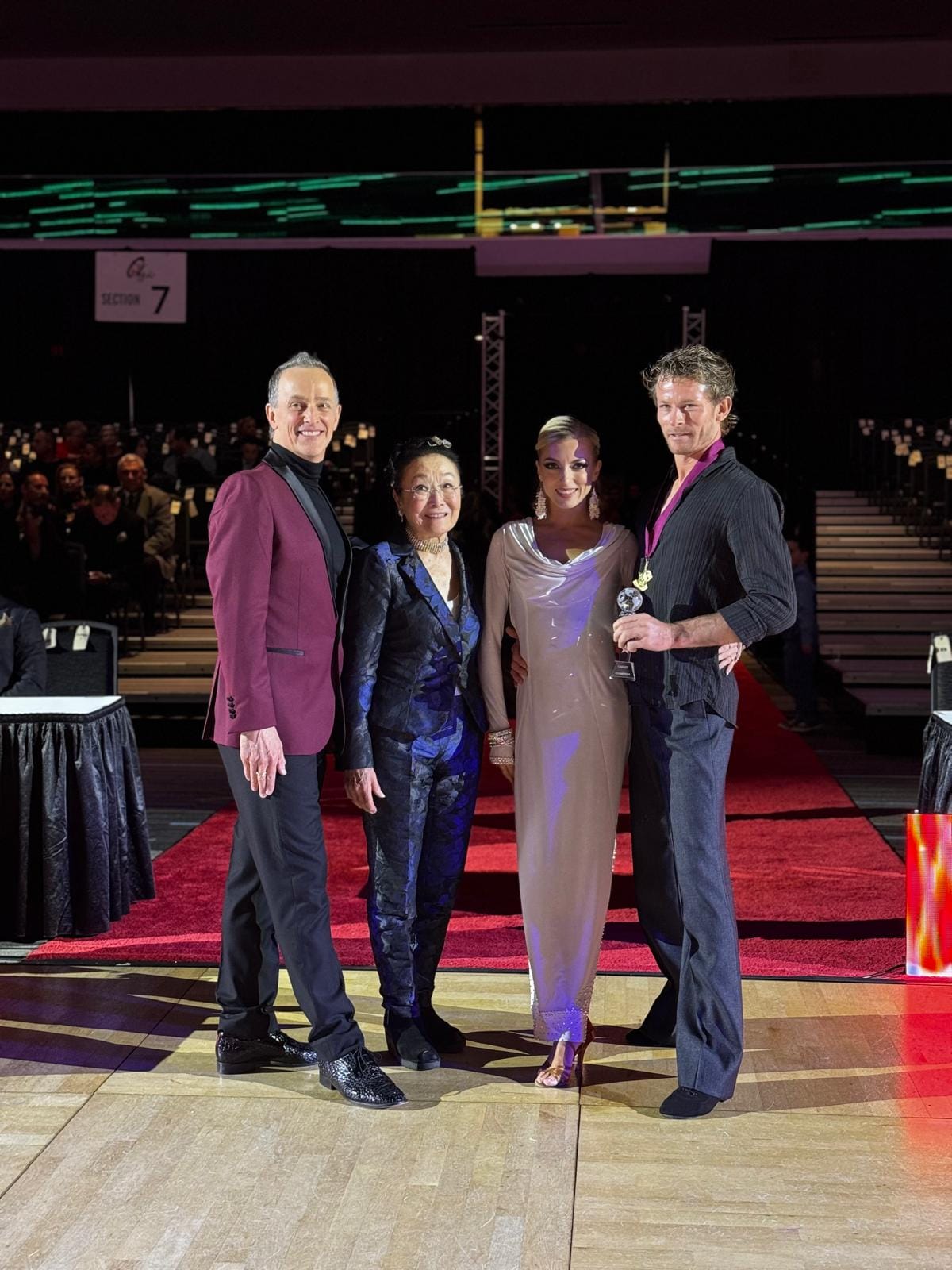
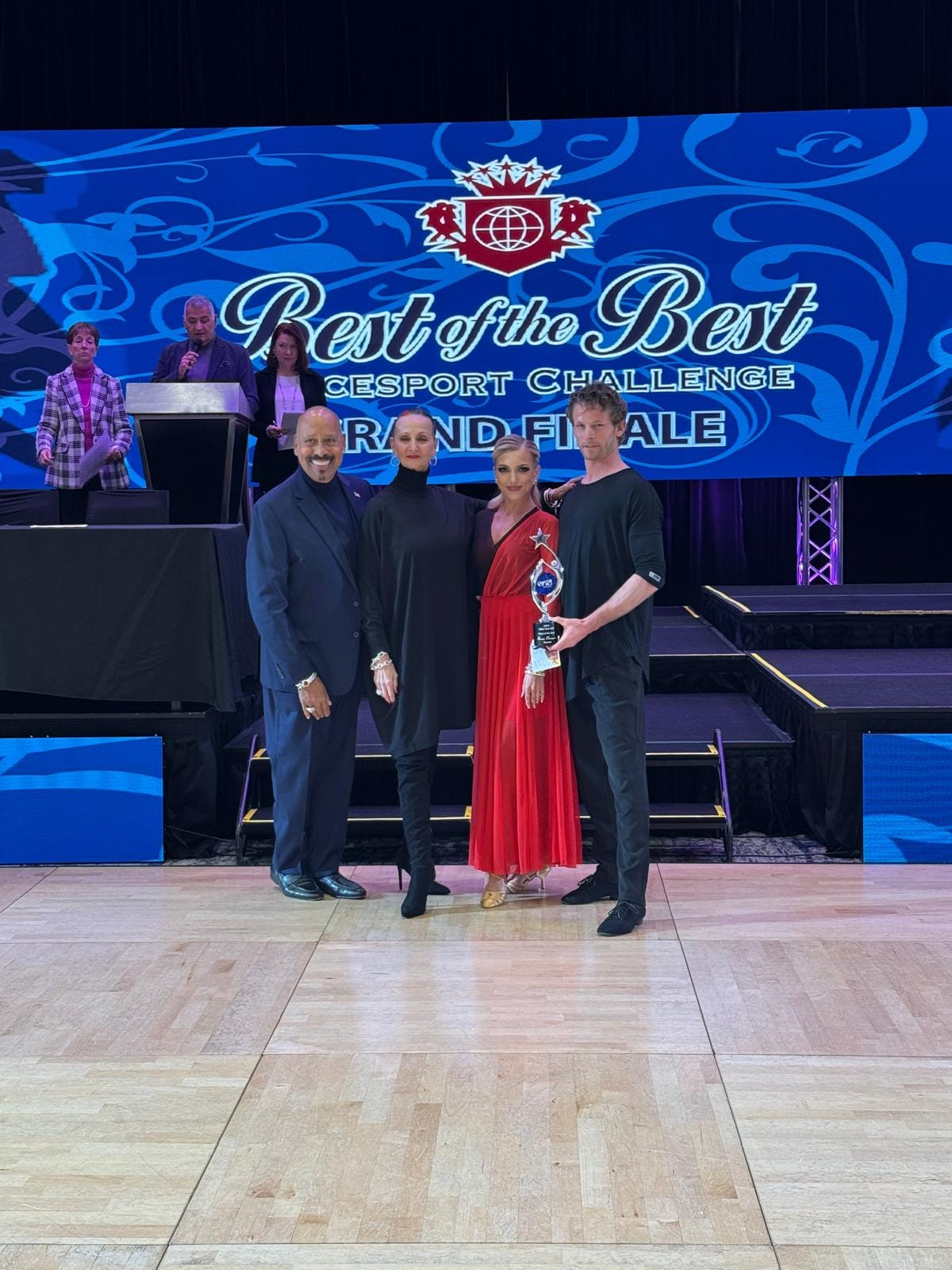
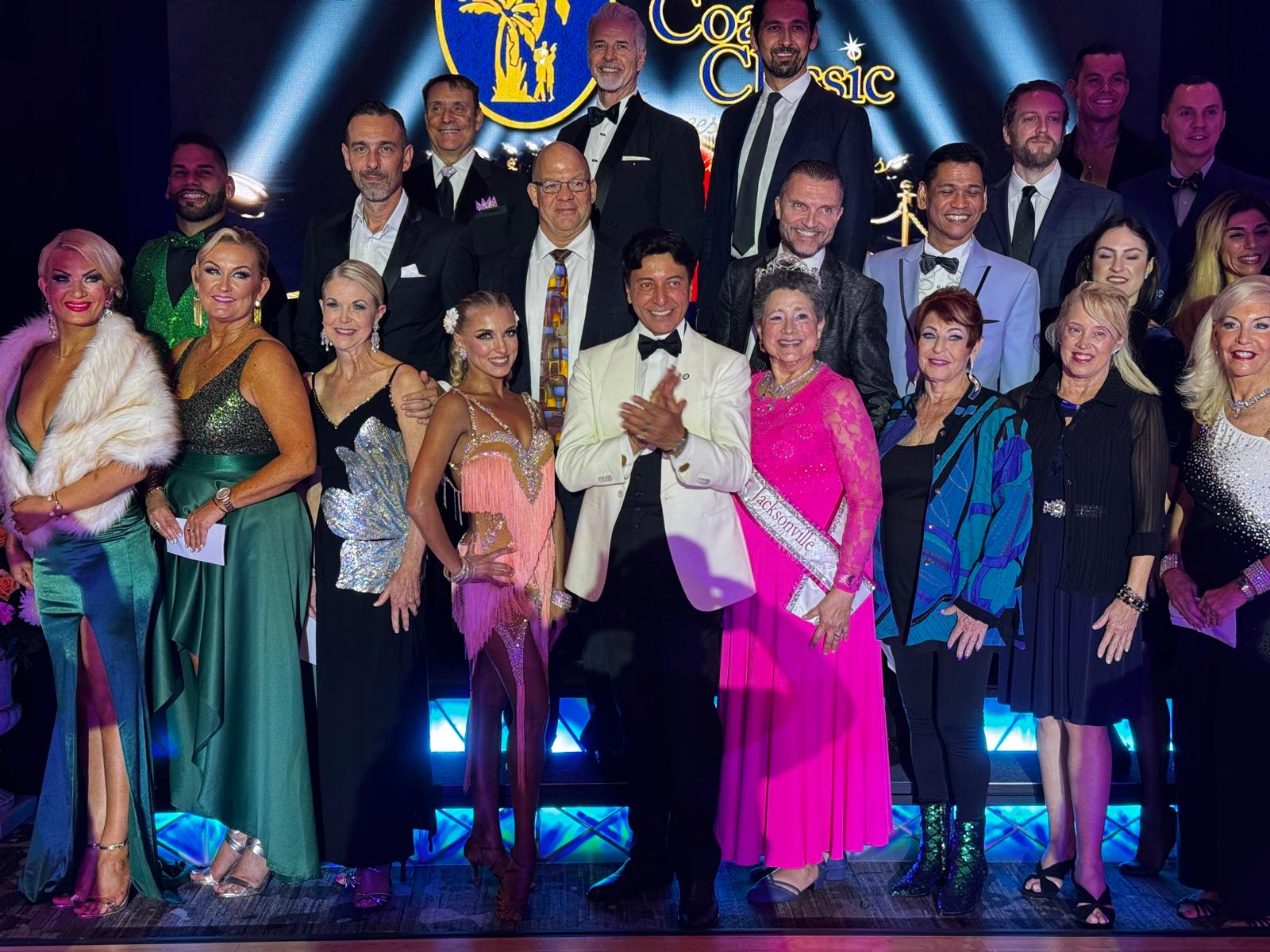
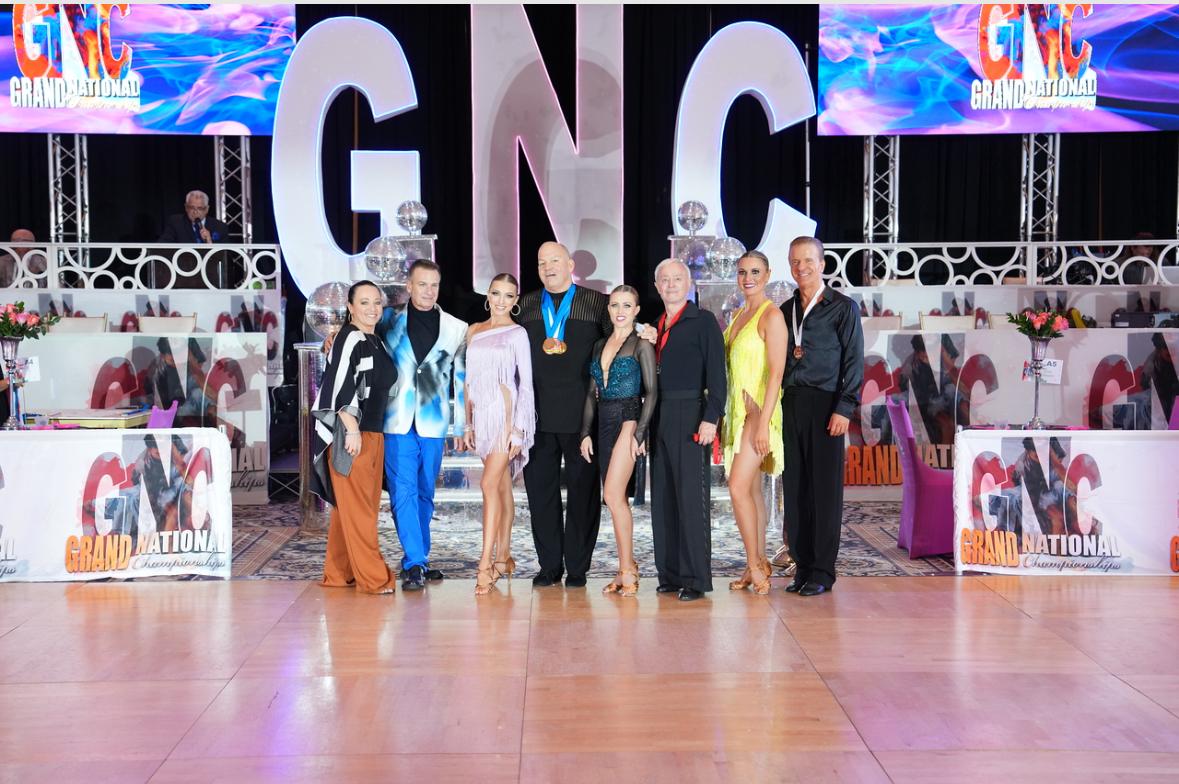
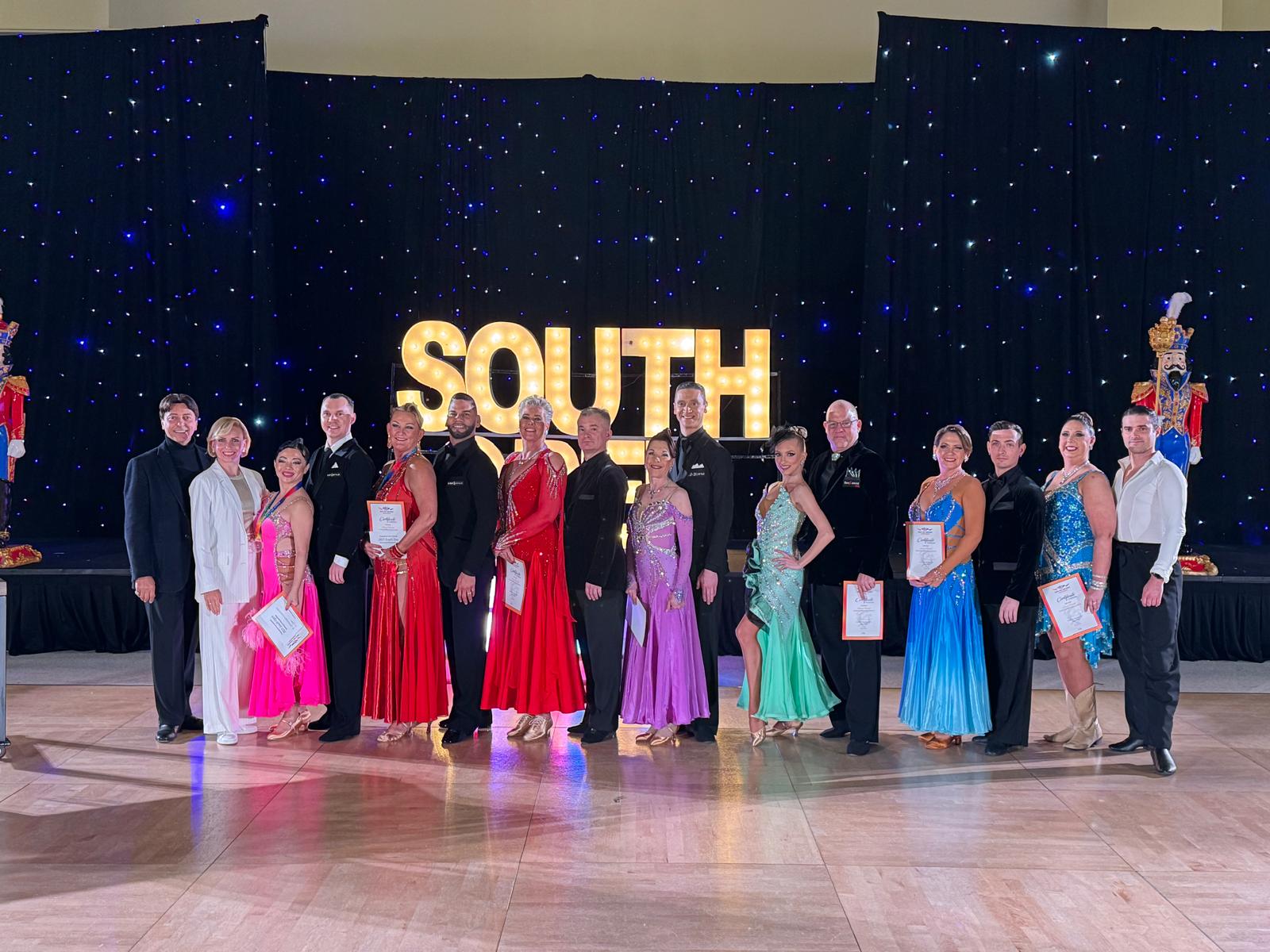
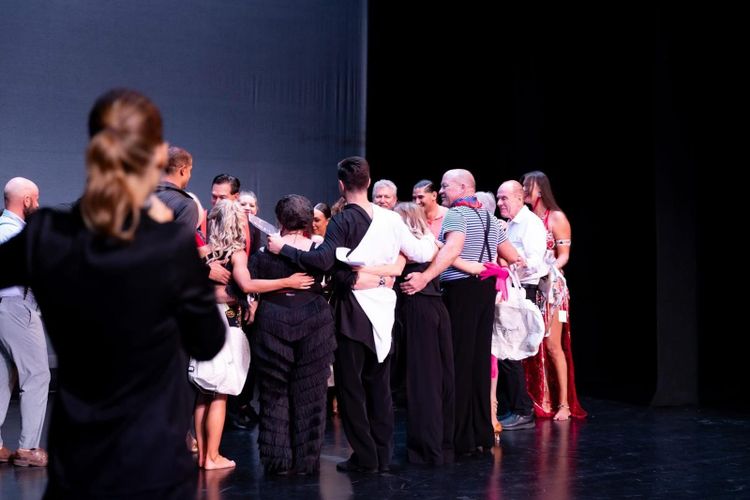
Sanda Lungu with SouL Dance Studio students at a Florida pro-am ballroom competitions.
What it actually looks like from a beginner
Ask Scott. He walked into this studio as a beginner and, at Florida Star Ball, took home the Top Student Award:
When I started my dance journey, I was 59 years old. This year I turned 62 and thoroughly enjoy getting out and learning something new and challenging. The thing about dance is there’s always a next level of detail which makes it exciting and adventurous to learn.
Scott, how long had you been dancing before your first competition?
I have been dancing for three years now. But I had only been dancing for 9 months before my first competition.
Which style(s) did you start in?
I started with bachata and salsa, then added cha cha rumba and tango, and did all those at the first competition.
How many heats did you enter that first time?
Approximately 100 heats the first time. The reason we did that many was because it takes some time to get used to dancing in a competition format.
After the first competition, we added swing, waltz and foxtrot. Then overtime, we added the Viennese waltz along with bolero and mambo. We have choreographed routines that we follow for each of the dances.
What is one thing that surprised you?
The biggest challenge or surprise has been the level of technical detail needed to get good in each of the dances. With time when I get one detail down, we add the next detail to it. So it’s continual learning and building and growing.
Learning the detail and next level techniques has been the most surprising because there’s always so much to add to it to be technically proficient.
What would you tell someone considering it?
The biggest thing is getting comfortable with dancing and overcoming the fear of performing in front of people. I find it is challenging as well as satisfying from a physical, emotional, and mental aspect, and it is a wonderful way to grow learn and improve.
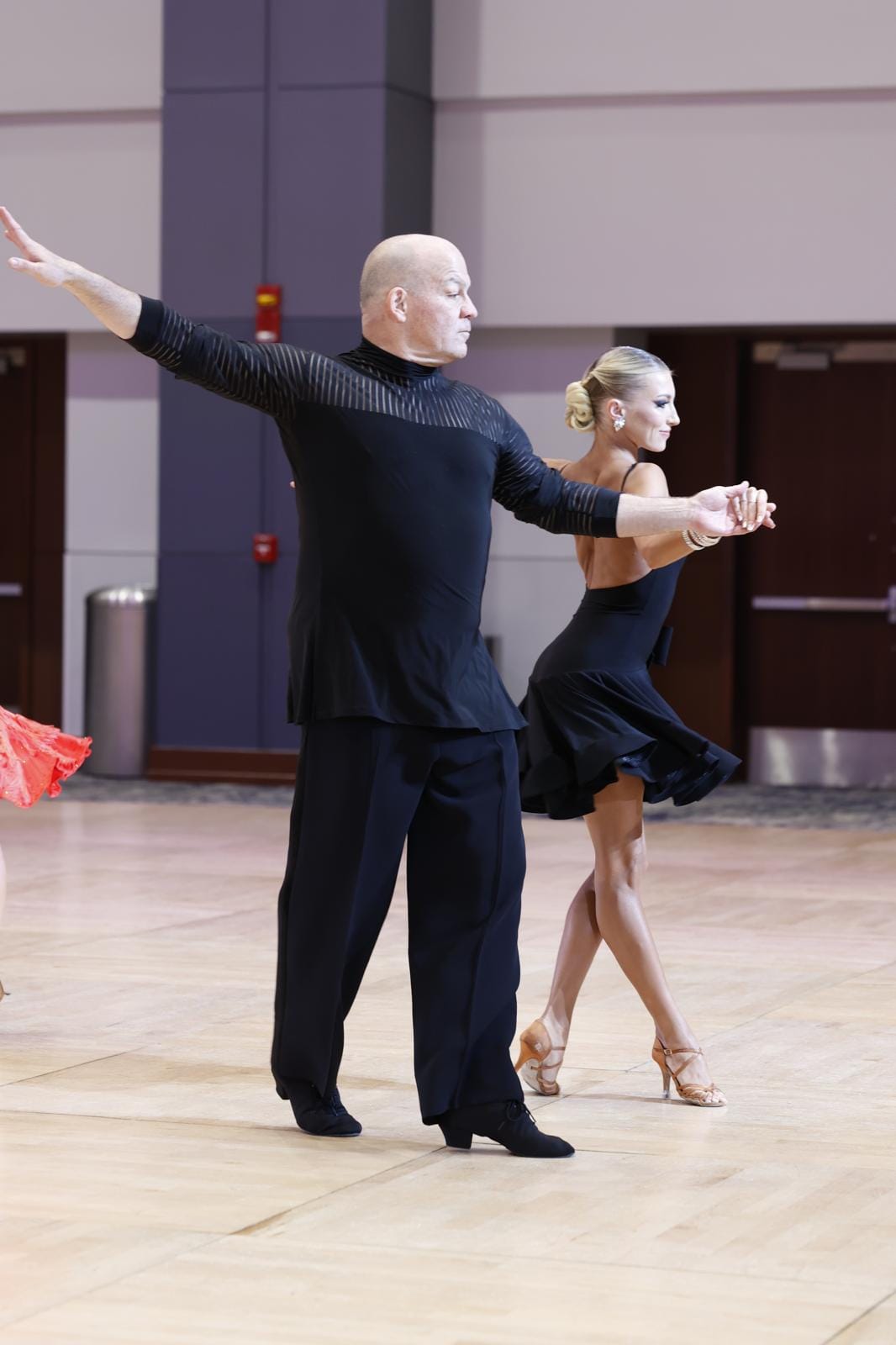
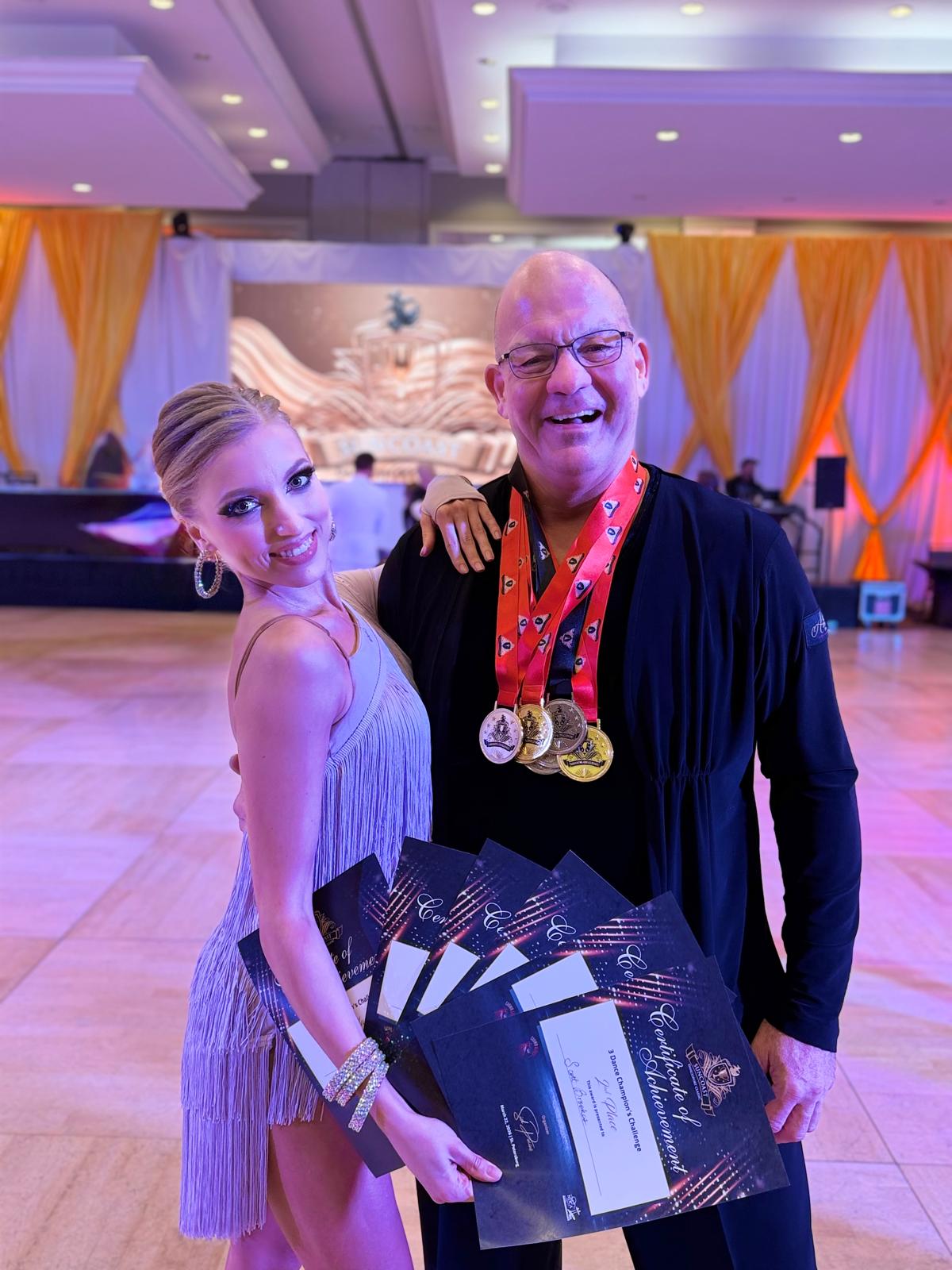
How do you enjoy working with Sanda?
Her personality attracted me to work with her. Her attention to detail and striving to always get better has kept me with her.
What we'll say is this — the number of students who compete once and never do it again is very, very small. Something happens in that ninety seconds. You spend weeks convinced you'll forget everything, and then the music starts and your body simply does what you trained it to do. Most people walk off the floor already asking about the next one.
Frequent Questions we get asked about pro-am dancing
Am I too old to start competing?
No. Age brackets exist precisely so that you're compared to your peers, and some of the most competitive divisions in this country are in the senior brackets. In the Sarasota and Bradenton area especially, this is a huge part of the community — and honestly, it's some of the most beautiful dancing you'll see all weekend.
How long before I'm ready?
For a Newcomer entry with a handful of heats, we generally see students ready in four to six months of steady lessons. If you already have a year or two of social dancing behind you, it can be much faster.
Do I have to compete to take lessons at SouL?
Not at all, and most of our students don't. Competing is one road. Social dancing, wedding choreography, showcases, and simply learning for the joy of it are all equally good ones.
What if I completely blank out?
You might. It happens to everyone at least once, and your professional partner is trained to lead you straight back into the routine without the judges ever knowing. Ninety seconds is shorter than you think.
Is a showcase a good way to try it first?
It's the best way. We run showcases three to four times a year, and they give you the costume, the audience, and the nerves without the scoring. If you're on the fence, start there. Get your feet wet in front of a friendly crowd first.
Ready to find out?
If any part of this has been rattling around in your head for a while, the next step is a conversation, not a commitment. Sanda has been dancing professionally for 20 years and coaching for 8 years across ballroom, Latin, ballet, and contemporary, and she'll tell you honestly whether the timing is right for you.
Come see us at our Sarasota location:
2821 Cattlemen Road, Sarasota, FL 34232 8215
Call (941) 330-4142, email sl.danceworld@gmail.com, or book a 30-minute chat with Sanda and we'll map out what a first competition would actually look like for you.
Chassé by!